If there’s one thing project managers love, it’s a solid plan. Unfortunately, reality rarely sticks to the plan.
After 27 years, the Rocky Mountain Project Management Symposium moved venues for the first time. It was the right decision, but it’s still a reminder that even the most established plans eventually change.
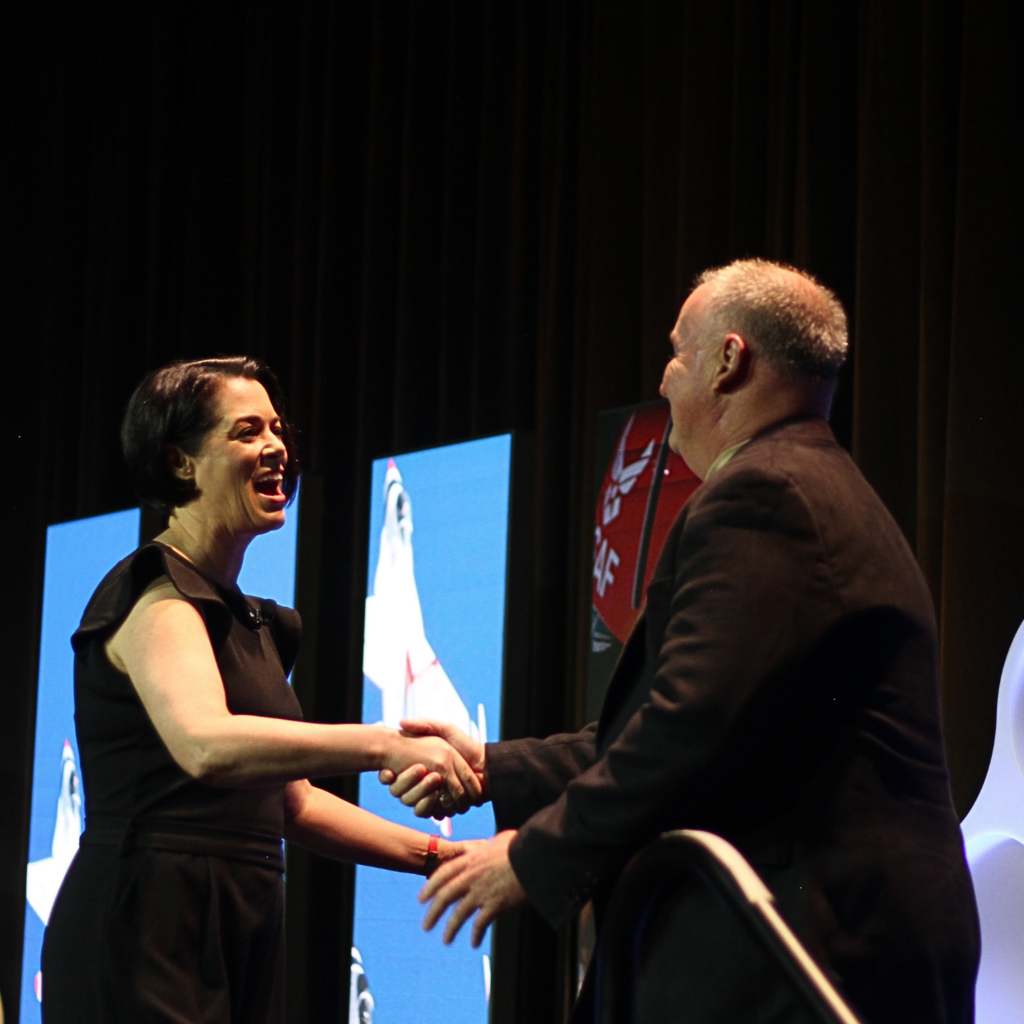
That’s what made this year’s keynote from Nicole Malachowski dovetail so nicely with our inaugural Symposium in the Gaylord Rockies Hotel. Her message was about leadership when the flight path encounters headwinds.
Change and obstacles are when leadership is tested, and trust is forged.
Trust Cannot Be Claimed
A large part of leadership comes down to trust. Trust cannot be taken or forced. It’s built through consistency, follow-through, and action over time.
To navigate difficult headwinds, leaders must cultivate trust with their teams.
Nicole talked about trusting her fellow pilots when they were flying in formation, and at all times. These were highly trained professionals, but even then, putting your life in someone else’s hands isn’t easy. Trust had to be built and, just as importantly, extended.
The same applies to project management and any field that requires strong leaders.
Your team doesn’t listen to what you say nearly as much as they watch what you do. They notice whether you show up. They notice whether you follow through. They notice how you act when things aren’t going smoothly.
For me, that means being present. Showing up to events. Mentoring. Networking. Staying engaged. Leadership isn’t something I delegate. It’s something I actively do.
And the reality is, trust is easy when things are going well. It’s tested when they’re not or when there are big changes.

Loosen Your Grip
Nicole shared a story about flying in formation during turbulence. When the headwinds hit, her instinct was to fight it by tightening her grip and forcing the plane back into position.
The result was the exact opposite of what she wanted. The more she tried to control it, the more unstable things became.
When she got back on the ground, another pilot told her the trick: Don’t fight the wind. Loosen your grip.
It sounds counterintuitive, but it works. When you stop overcorrecting and allow for adjustment, things stabilize.
That lesson applies directly to leadership.
When pressure hits, most leaders tighten control. They micromanage. They try to force outcomes. And in doing so, they often make things worse.
I saw this firsthand in the PMI Mile Hi Chapter. When I first joined as a volunteer, it wasn’t always a great experience. There were too many restrictions, too many administrative tasks in positions, too many gaps, and not enough flexibility.
When I stepped into leadership, I made a decision to let go of controlling every program. I trusted the board. They trusted their teams. And the result was better collaboration, stronger engagement, more autonomy with program leaders, and wildly successful programs.
My philosophy is simple: volunteering should be fun and easy. That cannot happen when everything is tightly controlled or micro-managed.
Nobody Wants a Scripted Life
Another message that stuck with me was this: nobody wants to live a scripted life.
People want to grow. They want to challenge themselves. They want to overcome obstacles and see what they’re capable of. But that only happens when leaders create space for it.
Nicole’s own story is a perfect example. When she first considered applying to the Thunderbirds, she was told it probably wouldn’t happen. That maybe she shouldn’t waste everyone’s time applying.
At one point, she believed it and withdrew her application.
It took another leader challenging that thinking, asking her “Why not you?”, to shift her perspective. She reapplied and became the first female Thunderbird.
As leaders, we have a role in that moment for others. We can reinforce the script or help people rewrite it.
I try to carry that into every mentoring conversation. People are more capable than they think, and our job isn’t to limit them to a plan. It’s to help them realize there are possibilities beyond what they’ve been told.
Say It: “I Need Help”
One of the most powerful moments from the keynote was centered on vulnerability.
Nicole talked about struggling with a maneuver for months. She kept trying to figure it out, but remained frustrated and stuck.
Nothing changed until she did something many of us avoid: She asked for help.
For whatever reason, this is something a lot of people struggle with, especially as they move up the leadership food chain. I’m sure its a combination of pride and a fear that others will see us as weak.
Get this, strong leaders say, “I need help.”
Imagine how much faster problems would get solved if more people were willing to do that. Imagine the level of trust that would build within teams if that kind of transparency was normal.
When a leader asks for help, it strengthens trust by giving others permission to do the same.
Leadership Shows Up in the Headwinds
The Symposium delivered a lot of great content, and one consistent theme:
Leadership isn’t about having control.
It’s not about having all the answers.
And it’s definitely not about everything going according to plan.
Leadership is proven in what you do when the plan falls apart.Do you show up and follow through?
Do you loosen your grip instead of forcing control?
Do you create space for others to grow?
Are you willing to say, “I need help”?
And can you communicate in a way that builds trust?
Anyone can lead when things are smooth. Headwinds show what kind of leader you really are, and forge you into the leader you can be.
A Sincere Ask
I’m going to model what it looks like to ask for help. As the PMI Mile Hi Chapter prepares for the future, we need help in a few ways. Our next major event on the calendar is Women in Project Management Leadership Summit (WPML) this fall, and we need a few core volunteers to step up to help lead this initiative. Here’s what we are looking for: a leader to help organize our 200+ women’s event gathering female PMs.
As we wrap up Symposium 2026, I’m already thinking of Symposium 2027, and we always need volunteers to steer this event. The planning starts now. This 750+ person event has many moving parts, and we are looking for people who feel passionate about delivering a world-class conference with us.
If you are interested in either of these opportunities, please email me: president@pmimilehi.org. I’d love to connect you with the right people and bring you on board.